



Weather impact on offshore operations
- Workability: Strong winds and building seas reduce operational windows across the northern North Sea and Norwegian Sea.
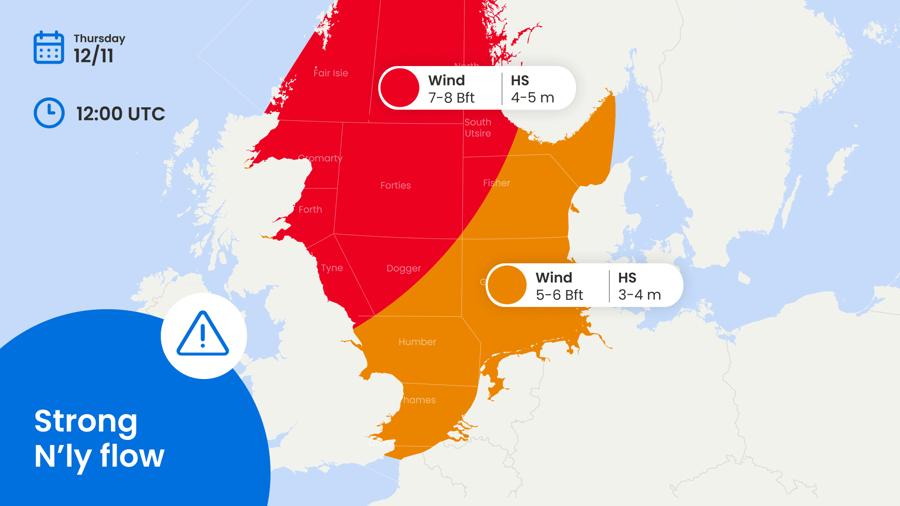
- Planning: Thursday and Friday present the greatest wind-related restrictions, while calmer periods favour operations in the southern North Sea.
- Operational continuity: Prolonged downtime risks and residual swell require flexible scheduling and continued monitoring.
In short: Prioritise operations during calmer windows in the southern North Sea and account for reduced workability further north.
Operational risk
Offshore construction, subsea operations and vessel transfers face increased downtime risks, particularly in the northern North Sea on Thursday and Friday and across the Norwegian Sea during the passage of deep lows. Operators should align weather-sensitive activities with available windows and maintain flexibility as conditions change.
Weather situation
North Sea
Low pressure over the Norwegian Sea and Scandinavia dominates conditions across the northern North Sea. Associated frontal troughs bring periods of strong winds and building seas. Conditions become particularly unfavourable on Thursday and Friday as the pressure gradient tightens and winds strengthen across northern sectors.
These conditions significantly reduce workability for offshore construction, subsea operations and crew transfers. Weather-related downtime is likely for more sensitive activities, with limited operational windows during the most unsettled period. Towards the weekend, conditions may become more manageable between passing troughs, although planning confidence remains limited.
The southern North Sea temporarily benefits from high pressure shifting eastwards from England towards central Europe. A weaker pressure gradient allows winds to ease and seas to become more manageable, supporting offshore maintenance, vessel transfers and other weather-sensitive activities.
These workable windows are expected to be more reliable than further north, although they may remain relatively short as high pressure moves eastwards. Operators should use the calmer periods while retaining flexibility around subsequent changes.
Norwegian Sea
Deep low-pressure systems cross the Norwegian Sea during the second half of the week, accompanied by active frontal troughs and a strong pressure gradient. Strong to potentially gale-force winds and rough to very rough seas create challenging conditions across exposed offshore areas.
Strong winds, building seas and persistent swell significantly restrict operational windows. Offshore construction, towage and vessel transfers face an elevated risk of prolonged downtime, particularly during the passage of the deepest systems.
Even when winds temporarily ease between frontal troughs, residual swell may continue to limit workability. This reduces opportunities for short-duration operations and increases the need for schedule flexibility and sufficient safety margins.
Conclusion
The southern North Sea offers the most favourable operational windows this week, while strong winds on Thursday and Friday reduce workability further north. Deep low-pressure systems also maintain elevated downtime risks across the Norwegian Sea.
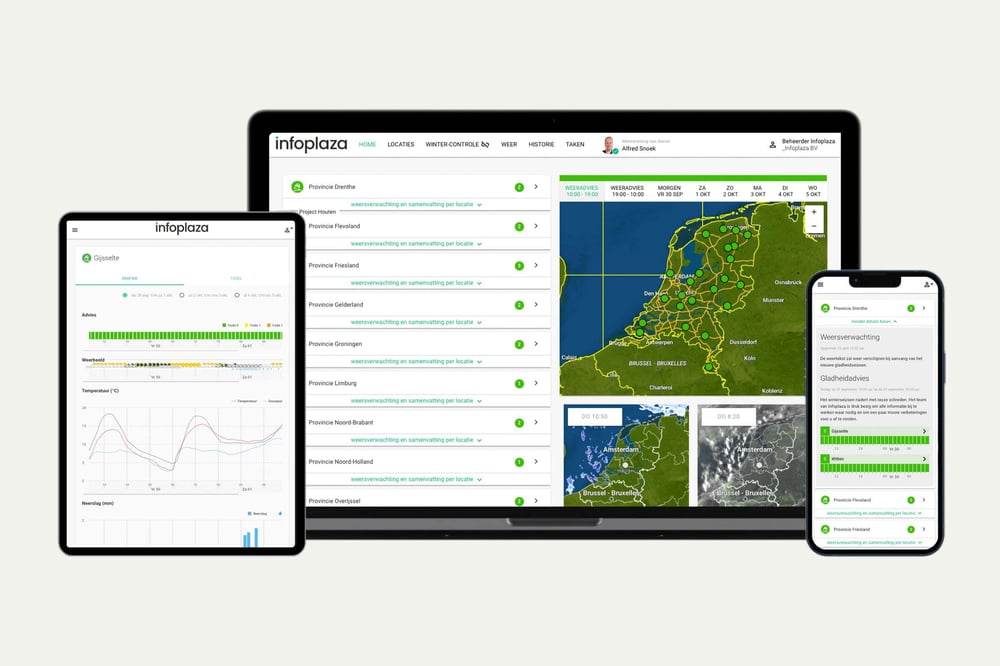
Already using Infoplaza? Monitor the latest marine forecasts through your dashboard to support operational planning. Exploring weather intelligence for your operations? Contact Infoplaza to discover how marine weather insights can support better offshore decisions.
Forecast confidence: The main Thursday–Friday wind risk is supported by the supplied marine guidance. Local operational limits and weekend developments require continued monitoring.

 Bram van Kester
 Marsel Blok

 Daan Koop

