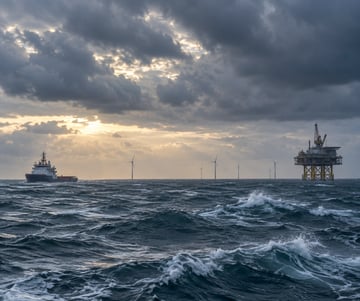
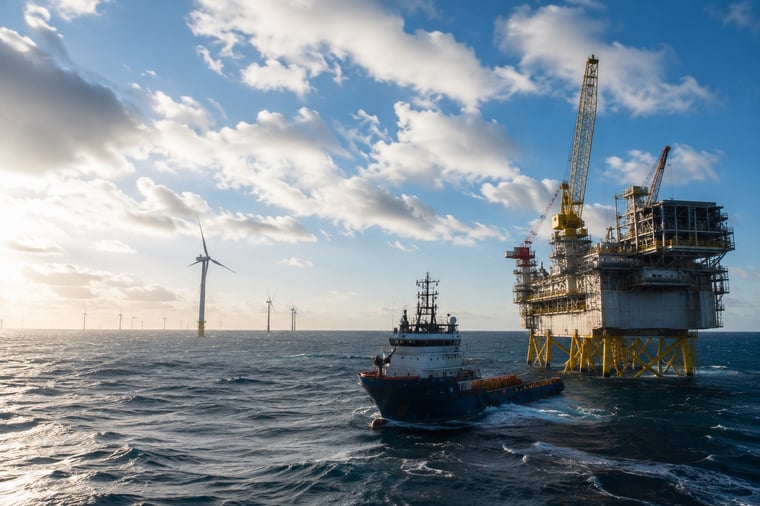
The North Sea continues to offer the most favourable operational conditions this week, providing a broad weather window for offshore activities. While light winds and low wave heights support efficient planning in northern European waters, tropical systems in the western Pacific and a developing Atlantic low introduce greater uncertainty for routing and schedule management elsewhere. Operators can benefit from stable North Sea conditions but should continue monitoring evolving weather patterns across the Pacific and North Atlantic.
Weather impact
- Offshore operations: Light winds below 15–20 knots and wave heights generally below 1 meter support offshore construction, maintenance, crew transfer and subsea activities across most North Sea sectors.
- Marine routing: Tropical systems Mekkhala and Hilgos may require route adjustments in the western Pacific as forecast tracks and associated swell fields continue to evolve.
- Atlantic exposure: Increasing winds and wave heights west of Ireland from Thursday onwards may reduce operational efficiency on exposed Atlantic routes.
In short: The North Sea offers the most reliable operational window this week, while Pacific tropical activity and a strengthening Atlantic low require continued weather monitoring and planning flexibility.
Operational risk
Operational weather risk remains low across the North Sea through the weekend. The main areas requiring attention are the western Pacific, where tropical systems may influence routing decisions, and Atlantic waters west of Ireland, where deteriorating conditions could affect weather-sensitive operations and transit schedules later in the week.
Weather situation
North Sea
A high-pressure system centered over the North Sea gradually shifts southeast during the second half of the week. Meanwhile, a low-pressure system over the Iberian Peninsula tracks north towards Ireland, where it merges with another Atlantic low before moving further north.
Despite these developments, the pressure gradient across the North Sea remains weak. Winds generally stay below 15–20 knots throughout the forecast period. Along the southern Norwegian coast, northwesterly winds may briefly increase to around 25 knots on Thursday.
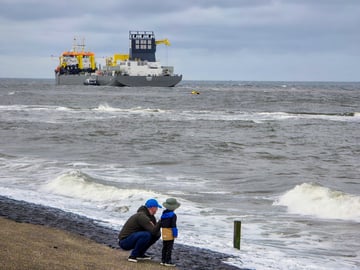
Sea states remain favorable, with significant wave heights below 1 meter across most sectors. The northern North Sea may occasionally experience wave heights of 1.0–1.5 meters. From Friday onwards, frontal troughs could trigger isolated thunderstorms, although widespread operational disruption is not anticipated.
These conditions provide a broad workable window for offshore construction, maintenance, crew transfer and subsea activities from Wednesday through Sunday.
Western Pacific
Tropical activity continues to increase across the western Pacific. Typhoon Mekkhala, currently located east of Taiwan, has sustained winds of approximately 70 knots. The system is forecast to move northeast while gradually weakening, reaching severe tropical storm strength by Thursday before tracking towards Japan during the following days.
Further south, Tropical Storm Hilgos remains well east of the Philippines. Forecast guidance indicates an initial northwestward movement accompanied by slight strengthening before the system turns north from Thursday onwards.
Although neither tropical system currently poses a direct threat to major coastal areas, both require close monitoring. Shipping operators should remain prepared for route optimization and evolving swell conditions as forecasts develop.
Northern Atlantic
A low-pressure system near Nova Scotia continues moving northeast across the Atlantic while gradually deepening. During the first half of the week, the strongest conditions remain near the US East Coast, where offshore winds may reach 20–30 knots. Significant wave heights around the low may build to 3–4 meters, particularly east of Nova Scotia.
As the system progresses northeast, it merges with the low developing near Ireland. This results in a strengthening pressure gradient west of Ireland from Thursday onwards, bringing freshening winds and increasing wave heights to exposed Atlantic routes.
While conditions become less favorable near Ireland later in the week, the highest waves associated with the system remain concentrated near Canadian and northeastern US offshore waters.
Conclusion
The most favorable operational opportunities this week are found across the North Sea, where stable high pressure supports light winds, low waves and extended workable weather windows. Elsewhere, tropical developments in the western Pacific and a strengthening Atlantic low increase planning uncertainty and may affect routing decisions for weather-sensitive operations.
Existing Infoplaza customers can monitor the latest forecast developments and operational weather risks through their marine dashboard and alerting services. Organizations looking to improve weather-driven decision-making can contact Infoplaza to explore how tailored marine forecasting and monitoring solutions support safer and more efficient operations.