



Synoptic overview
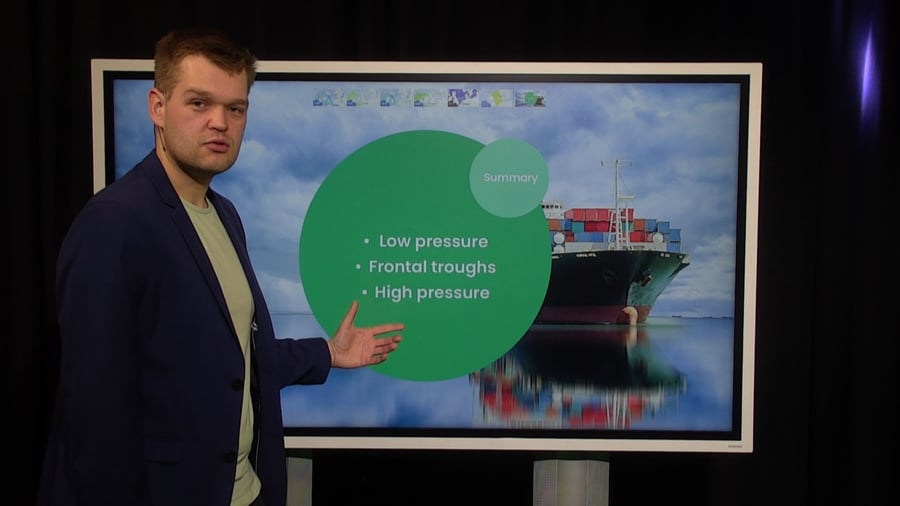
Low pressure is located above the UK. This low is moving over the southernmost part of the North Sea towards the Netherlands on Wednesday. At the same time, a weak ridge of high pressure is building over the Northern North Sea. This ridge moves southeastward later on Wednesday and early Thursday. By that time, an active low-pressure system is located near Iceland. An associated trough, gradually filling, moves across the North Sea on Thursday. Simultaneously, a large high-pressure system builds up over the Bay of Biscay. Its associated ridge lies over the North Sea during the weekend. This strong high-pressure system leads to a decrease in unsettled weather.Video briefing at the end of this article
Wind and waves
A low-pressure area is situated above the southern part of the North Sea, as shown in Figure 1. To the south of the low, a southwest wind is blowing, while to the north of the low-pressure center, a fairly strong east wind (force 6) is prevailing. Due to the strong wind and a relatively long fetch, the highest waves occur in this area. The significant wave height is often around 3 meters. Particularly along the east coast of England, Hs sometimes exceeds 3 meters (Figure 3). As the low moves southeastward later on Wednesday, both the wind and waves will decrease.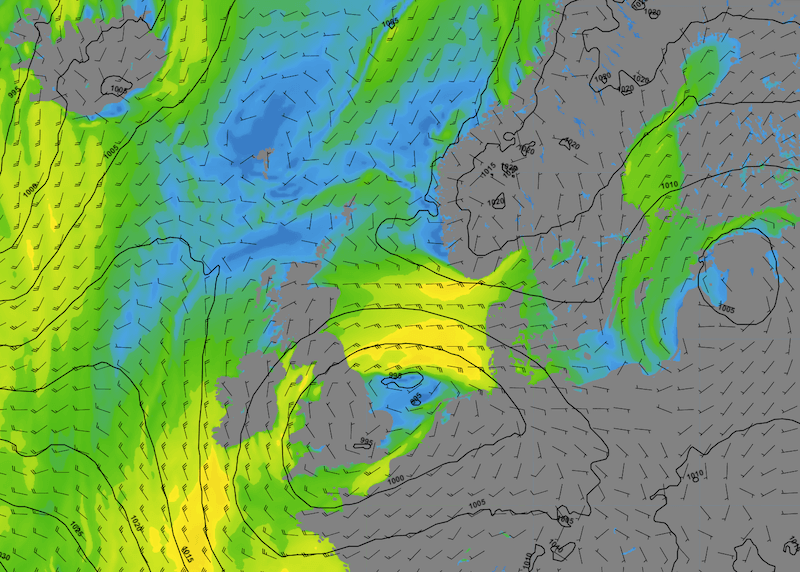 Figure 1: Wind speed and wind direction according to GFS on Wednesday at 00UTC.
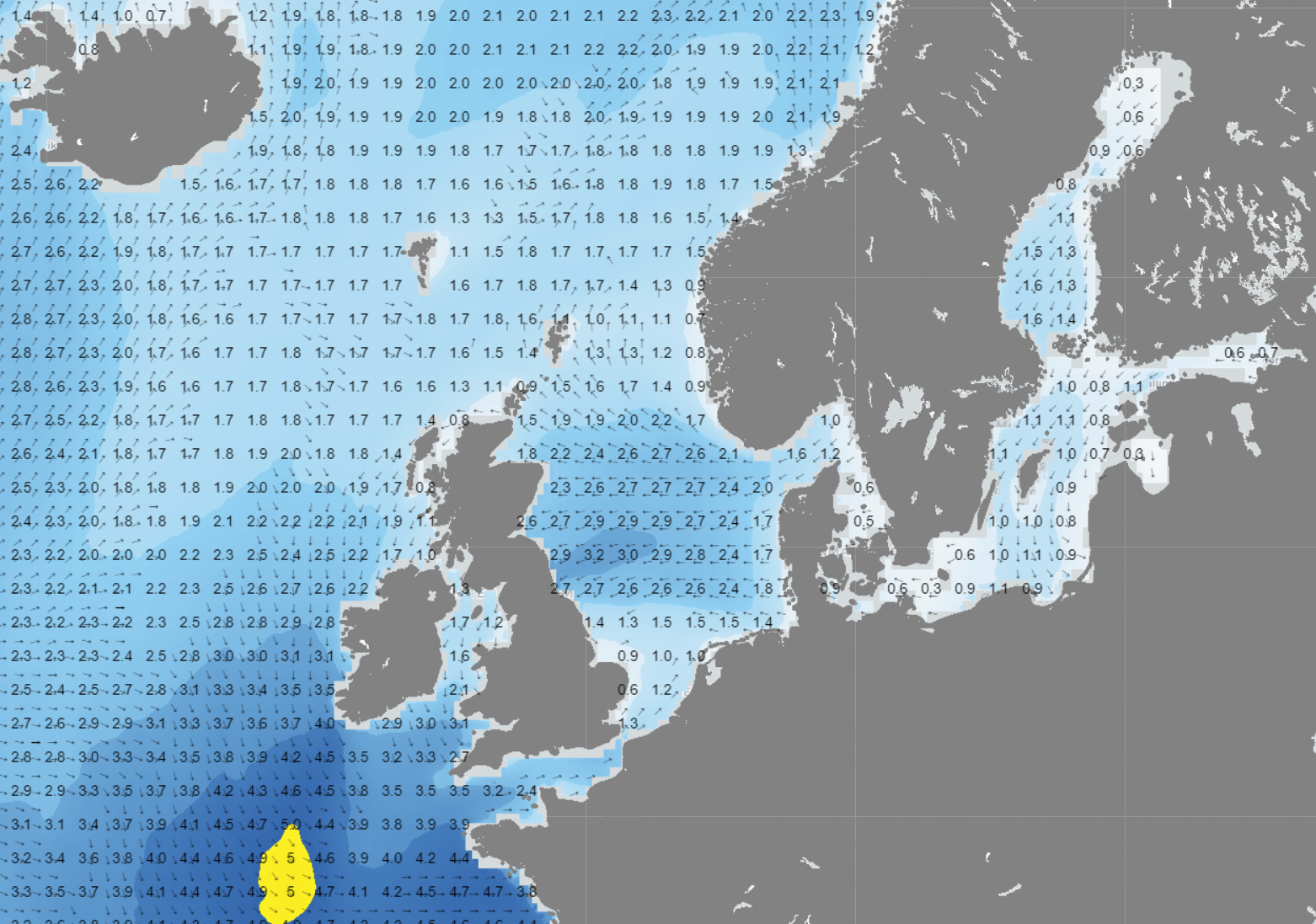 Figure 2: Wave height and wave direction according to GFS on Wednesday at 00UTC.
As described in the synoptic description, a ridge is expected to move from north to south over the North Sea later on Wednesday. This will temporarily stabilize the weather. A weak front on Thursday will cause a slight increase in wind and waves, but no more than 2 meters of significant wave height is anticipated. Starting from Friday, a large high-pressure system will move from the Bay of Biscay towards the southern North Sea (Figure 3). This will lead to a gradual decrease in significant wave height (Hs). In the extreme southern part of the North Sea, Hs is often no more than 0.5-1 meter, while farther north, Hs is expected to increase to 3-4 meters along the southwest coast of Norway (Figure 4).
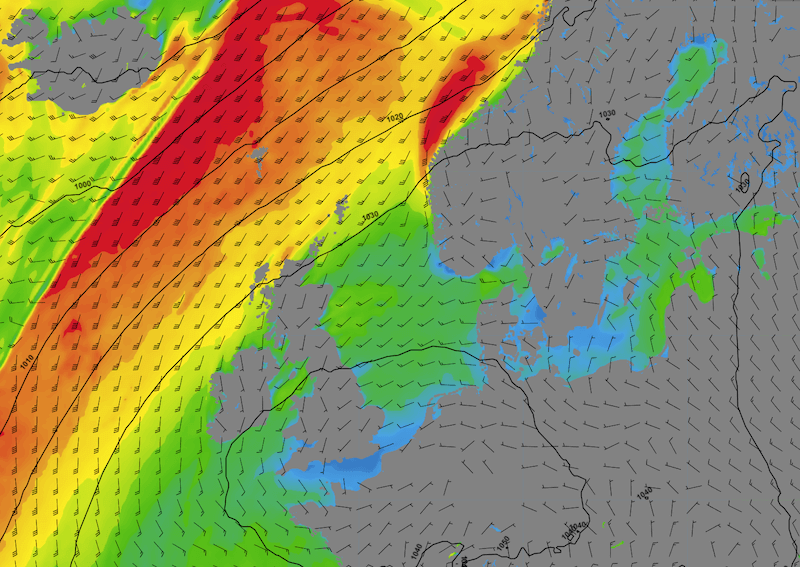 Figure 3: Wind speed and wind direction according to GFS on Saturday at 00UTC.
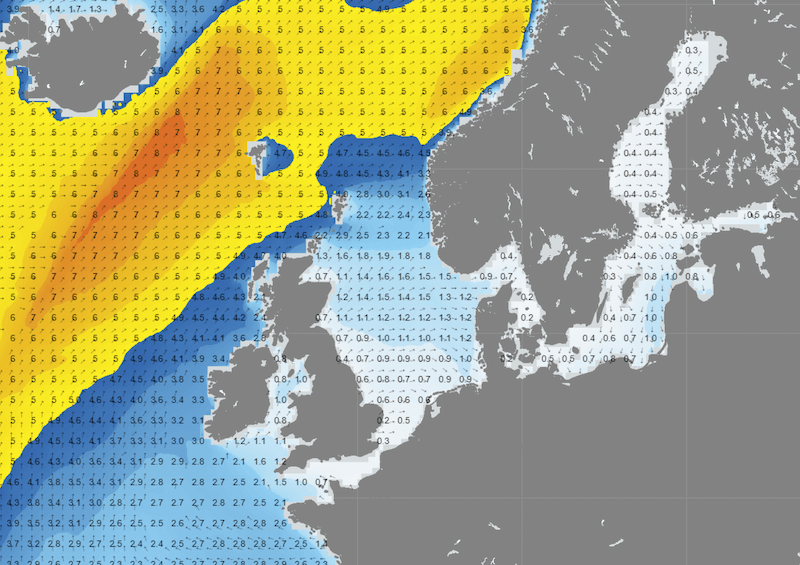 Figure 4: Significant wave height and wave direction according to GFS on Saturday at 00UTC.
Conclusion
A low-pressure area above the southern North Sea, especially during Tuesday and Wednesday, introduces uncertainty and an increase in wind and waves, particularly just north of the low-pressure center. A weak high-pressure ridge brings more stable weather into the night towards Thursday. Truly stable conditions are expected over the weekend due to an extensive high-pressure system above the far southern North Sea. Specifically in that area, both the wind and waves will significantly diminish, creating numerous workable windows.
Always up-to-date
Like this weather briefing? Our monthly newsletter gives you even more insights. Think about the marine weather phenomena, updates about our ever-evolving forecasting products and the latest and most relevant marine weather briefing. Subscribe to receive our Infoplaza marine newsletter once a month. 
 Bram van Kester
 Sofia Rudenko

