.png?width=500&name=Ontwerp%20zonder%20titel(1).png "Back to home")



Strong southeasterlies over the North Sea
High pressure is present over Scandinavia and is expected to strengthen the coming days, before moving east into northwest Russia during the weekend. It is strong enough to keep deep low pressure over or just west of the UK and over the northern Atlantic Ocean. However, the associated frontal troughs are able to affect the North Sea from time to time.
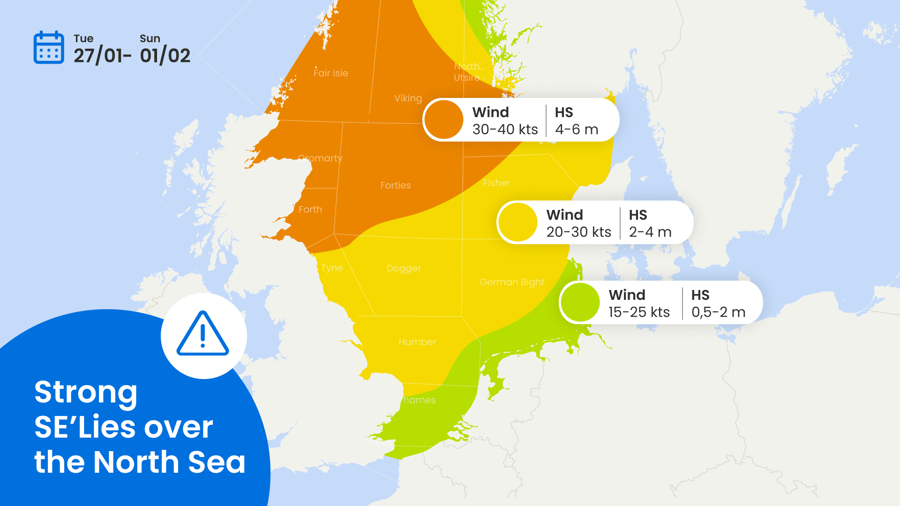
This pressure distribution results in a predominantly southeasterly flow over the North Sea, with generally strong to gale force winds (22-40 knots). Highest winds are expected over the northwestern part of the North Sea today, gradually shifting NE. From tomorrow onwards, highest winds are expected over the shipping sectors South Utsire, Viking and the northern part of Forties, possibly reaching strong gale at times (>42 knots). At the same time, conditions over the southern North Sea come down a bit, with mostly moderate to fresh winds until the weekend.
Under the influence of this southeasterly flow, waves are expected to be highest over the northwestern part of the North Sea (especially the sectors Fair Isle and Viking). The significant wave height reaches up to 5-6 meters in these area. The rest of the North Sea will see 2-4 meters generally, with lowest waves of under 2 meters closer to the Dutch and German coastlines.
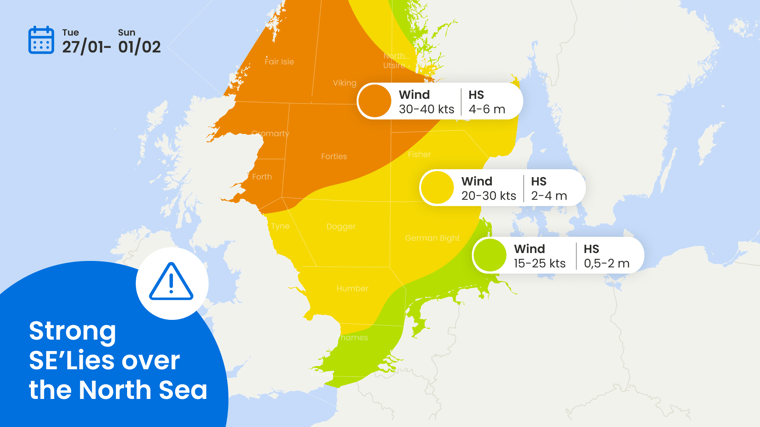
Figure 1: A firm southeasterly flow is present over the North Sea, between high pressure over Scandinavia and low pressure over the Atlantic Ocean.
Worse conditions west of the European mainland
While high pressure prevents deep low pressure to enter the North Sea, the areas west of the UK and France are fully impacted. The waters just southwest and south of Ireland will see strong gale to locally storm force winds today (50 knots) as low pressure is located over Ireland, with conditions improving tonight. Tomorrow, strong to near gale conditions continue over the Celtic Sea and west of the Bay of Biscay with 22-30 knots and generally 6-8 meters significant wave height. High waves area expected closer towards the Iberian peninsula. In the days after, frontal troughs continue to affect the region. From time to time, winds will reach (near) gale force and the significant wave height often fluctuates between 5 and locally 9 meters. During the weekend, it looks like conditions will gradually improve.
Coming night, a secondary strong but small-scale low pressure area develops just west of Portugal. It quickly moves E into Portugal early tomorrow morning. Winds are expected to reach close to 60(!) knots in the waters west of Porto. The significant wave height reaches well over 10 meters in a relatively small area around the low pressure core. The wind conditions quickly improve tomorrow morning, but the significant wave height remains between 5 and 8 meters west of Portugal for the remainder of the week.
Conclusion
High pressure over Scandinavia and low pressure over the Atlantic Ocean maintain the strong southeasterly winds over the North Sea this week. However, the worst conditions are forecasted for the area west of England, France and the Iberian peninsula. Marine operations will likely be disrupted in many areas in northwest Europe this week. Consult the latest weather forecasts for the most current information and stay safe!
Stay updated on LinkedIn
We plan to post this Weekly Weather Update on our Infoplaza for Marine Weather Operations LinkedIn page as well. This is also the place where we will share other insightful marine weather articles, so be sure to follow us to never miss an update.

 Marsel Blok
 Daan Koop