Welcome to the Weekly Weather Update – your guide to the world’s oceans and seas. Each week, we highlight key marine weather patterns and analyse unusual or significant weather events. From calm spells under high pressure to tropical cyclones forming in equatorial waters, and from jet streams steering oceanic storms to anomalies in sea-surface temperature that shape global climate patterns. Here’s what this week’s weather has in store.
The North Sea
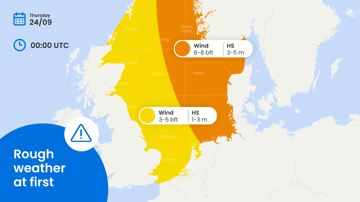
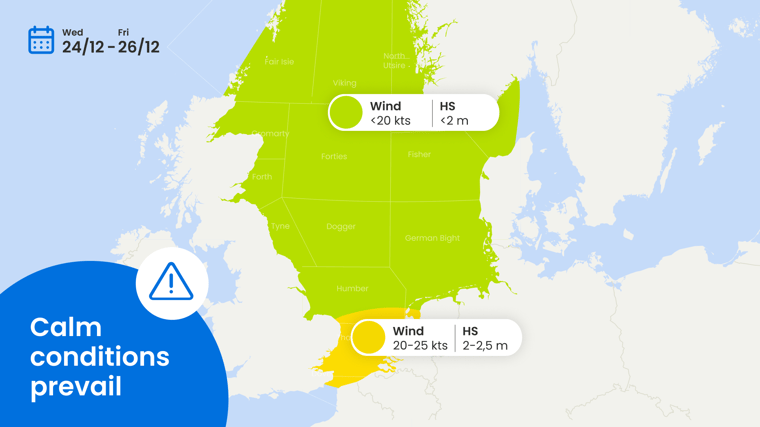
Currently, wave heights and wind speeds over the entire North Sea remain below 2.5-3m and 20-25 kts (Figure 1), and well below these values in the central North Sea on Wednesday, Thursday and Friday, as the high pressure area moves SE to and across the North Sea by then.
As the high gradually moves further westward on Friday and into the weekend, the conditions are expected to deteriorate somewhat during the weekend. Low pressure enters northern Scandinavia by then, tightening the pressure gradient over the North Sea and consequently increasing wave heights and wind speeds. This will mainly be the case for the eastern half of the North Sea. At this moment, it is still uncertain to which extent this will be the case. In the worst case-scenario, wind speeds could reach around 35-40 kts with waves up to 4-4.5 m (Figure 2). More positive projections suggest wave heights of 3.5m and wind speeds near 25 kts. In the western half of the North Sea, conditions remain more calm during next weekend.
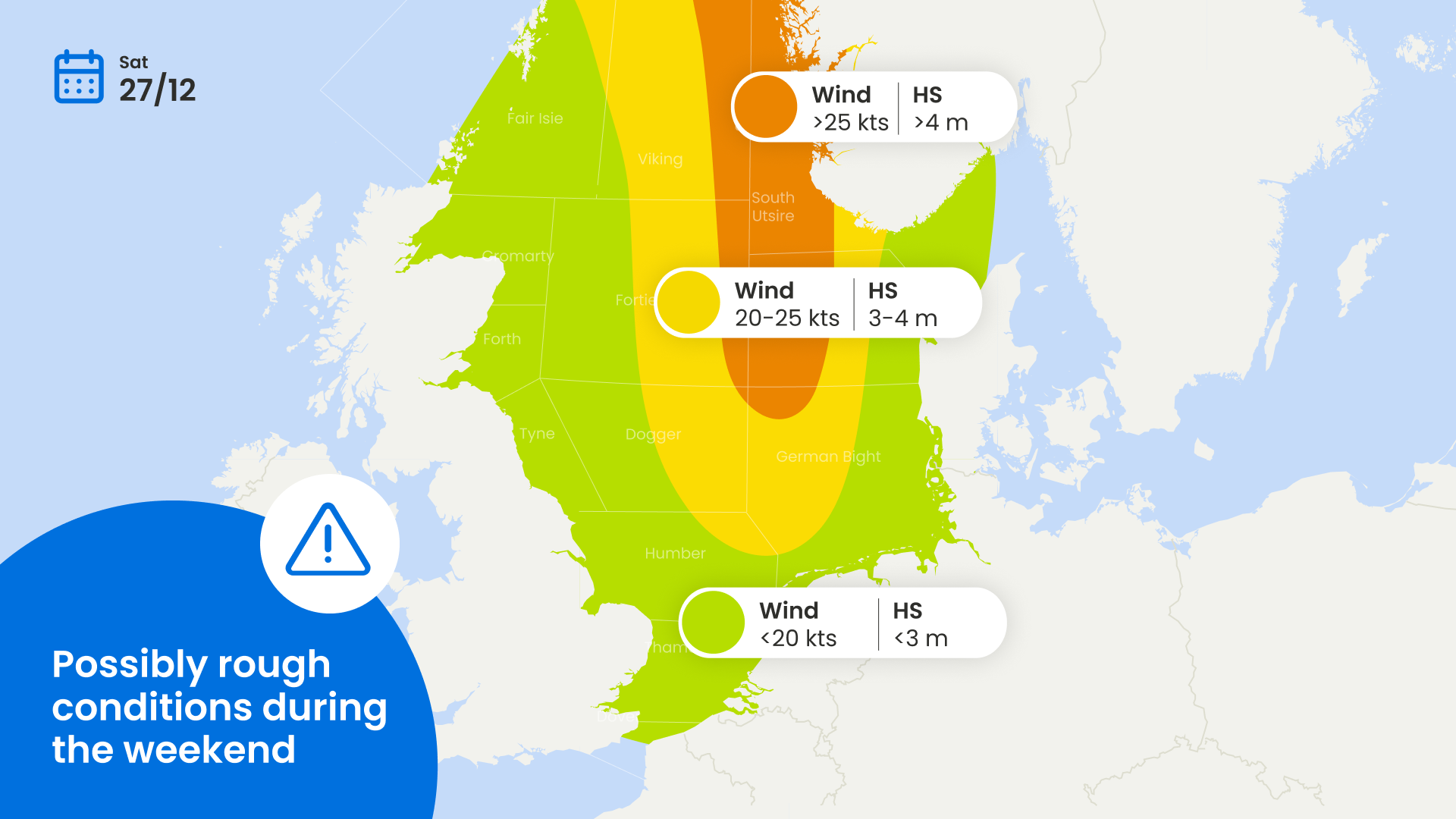 Figure 2: Worst-case scenario for the North Sea during the weekend.
Norwegian Sea
Although pressure over Scandinavia is generally high in the coming days, the Norwegian Sea will still experience periods of adverse weather at times this week. Multiple low pressure areas track northward across the northern Atlantic, passing through the Denmark Strait towards the Greenland Sea and Svalbard. Associated troughs affect the Norwegian Sea from time to time, alternating with calmer periods under ridges extending from the Scandinavian High.
The most challenging conditions are expected on early Thursday and early Saturday. Wind speeds may reach 40 kts on Thursday, with wave heights up to 6 m. On Saturday, waves may even reach up to 10 m locally. During intervals dominated by high-pressure ridging, conditions will temporarily improve. Under the influence of high pressure, conditions are more calm.
NE Atlantic
Similar to the situation in the Norwegian Sea, the northern Atlantic experiences adverse conditions at times too. A series of low pressure areas track eastward from Ontario and Quebec across the northeastern USA into the Atlantic, before curving northwards along Newfoundland into the Labrador Sea. The effects nearshore remain moderate in the US, with maximum wind speeds near 30-35kts and wave heights up to 2.5-3m. Further offshore in the Atlantic and in the Labrador Sea, conditions will be more severe, leading to severe gale or even storm conditions and wave heights of 11m could be measured. Rough conditions are also foreseen along the northern and eastern coasts of Newfoundland.
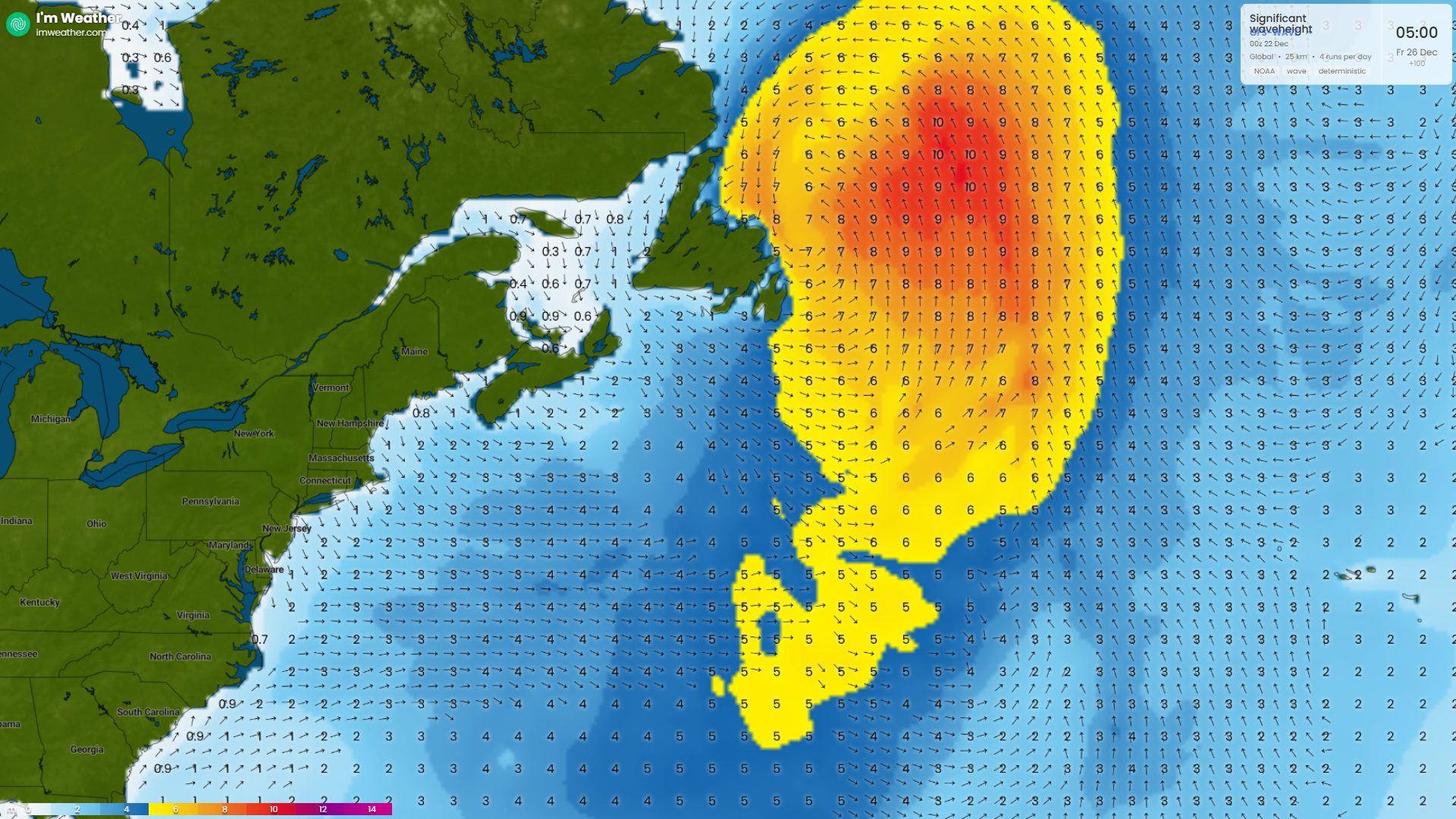 Figure 3. Low pressure leading to high waves over the northeastern Atlantic on Friday.
Conclusion
High pressure over Scandinavia will largely control North Sea weather during the week, bringing relatively calm and stable conditions over the region. As the high pressure moves further W towards the weekend, the pressure gradient tightens, particularly over the eastern North Sea. This leads to increasingly rough conditions over the North Sea during the weekend, although the extent remains uncertain still.
In contrast, low pressure leaves its mark on the weather in the Norwegian Sea and Atlantic in the upcoming week. In both areas, wind speeds are projected to exceed 40 kts at times, and wave heights may reach 10m in the most exposed areas.
To remain informed about the weather at your location, we recommend you to consult the latest weather reports. Stay safe, and we look forward to updating you again next week!
Stay updated on LinkedIn
We plan to post this Weekly Weather Update on our Infoplaza for Marine Weather Operations LinkedIn page as well. This is also the place where we will share other insightful marine weather articles, so be sure to follow us to never miss an update.