As cold polar airmasses spread out over Europe this week, the weather remains unsettled for a prolonged period of time. Low pressure tends to dominate the area and surrounding waters with localised wind and wave maxima. Find out below where and when your workable windows will occur in this week’s weather update.
Weather impact
- Workability: For the North Sea conditions remain rather workable this week under the influence of low pressure crossing the basin. In its wake increasing north(west)erlies are expected to affect the northern and western sectors of the area from Thursday onward.
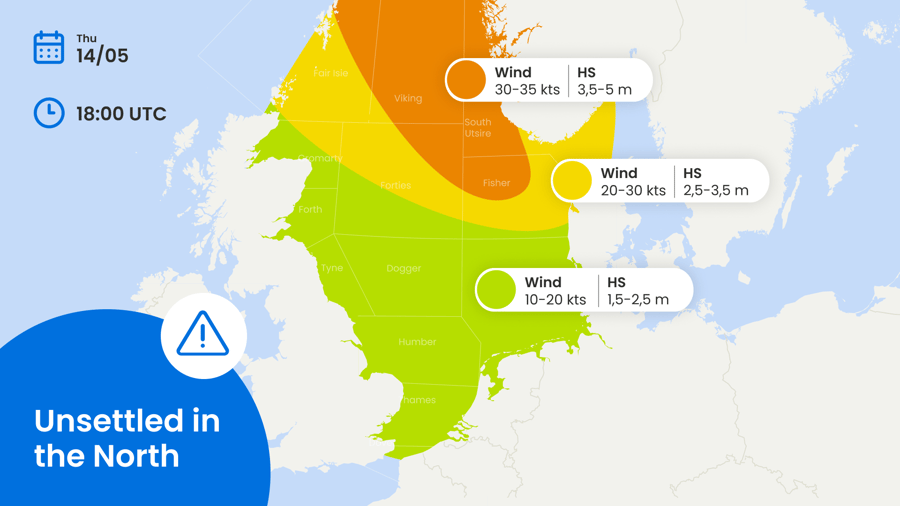
- Downtime risk: Later in the week wind speed and wave height increase, mainly over the northern and western North Sea. Eventual Hs is somewhat uncertain at the moment, but might increase to well over 5.0m in the far north; accompanied by (near) gale force winds in the course of Thursday and Friday, leading to disruptions of maritime operations.
- Possible hazards: Also for the Bay of Biscay there’s an enhanced risk of disrupting gale force winds and associated strong gusts late Thursday and into the night to Friday. The development and location of this wind field is rather uncertain though. Hs will peak well over 4.0m in worst case. Another disturbance passes the Irish Sea a bit earlier, on Wednesday, with Hs up to 2.5m and 6-7 Bft coming from the northwest before conditions improve again.
Weather situation
A broad low pressure pattern unfolds over European waters with several troughs crossing the area. For the North Sea, Bay of Biscay and Irish Sea this implies conditions as previously mentioned. The Baltic Sea is positioned ahead of the main axis of the steering large scale (upper) trough with, generally speaking, moderate to fresh southwesterly winds. After today’s peak Hs is expected to remain below 2.0m for the rest of the week, meaning plenty of operational windows will occur.
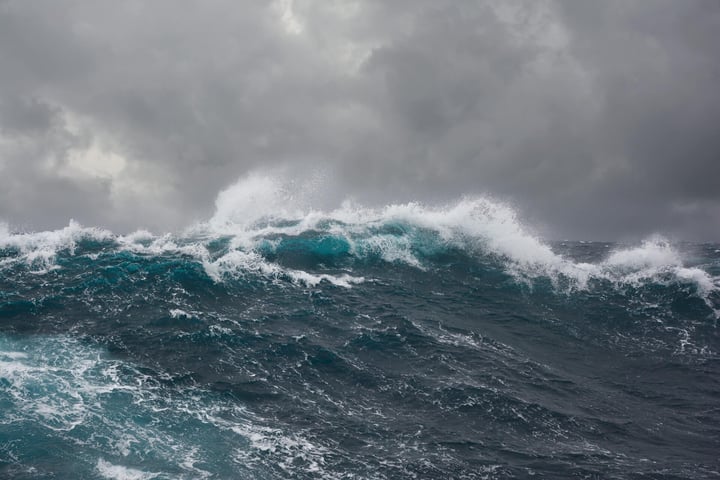
Stronger winds and higher waves coming into the northern North Sea.




 Bram van Kester
 Marsel Blok
 Daan Koop

