A northerly flow temporarily reduces North Sea workability on Wednesday and Thursday. Stronger winds and building seas shorten operational windows, particularly in the northern, central and eastern sectors. Conditions start to improve from Friday as winds ease and wave heights decrease. The weekend offers the broadest window for weather-sensitive offshore operations.
Weather impact on North Sea workability
- Timing: The most restrictive conditions occur on Wednesday and Thursday, with improvements developing from Friday.
- Operations: Shorter workable windows affect crew transfer, subsea work, exposed offshore construction, towage and coastal logistics.
- Regions: Viking, Utsire, Forties, Dogger and exposed parts of the Skagerrak and Kattegat face the greatest constraints.
In short: plan weather-sensitive offshore work from Friday onwards, where local conditions allow.
Operational risk
The main operational risk is the combination of stronger northerly winds, building seas and temporarily reduced visibility in showers. Teams should account for shorter operational windows and possible downtime on Wednesday and Thursday, especially in exposed northern, central and eastern sectors.
Weather situation
North Sea
A low-pressure system moves east across northern Europe on Wednesday, while high pressure remains over the Atlantic. The resulting pressure gradient establishes a northerly to northwesterly flow across the North Sea.
Winds strengthen on Wednesday and remain quite strong through Thursday. The long northerly fetch allows seas to build across Viking, Utsire, Forties and Dogger. These conditions shorten workable windows for crew transfer, subsea work and exposed offshore construction.
Nearshore operations along the Dutch and German coasts also face stronger winds and locally unsettled conditions. Showers may temporarily reduce visibility.
From Friday, the pressure gradient weakens as the low-pressure system moves away and a ridge extends into the southern North Sea. Winds decrease and seas subside, first in southern sectors and later farther north. Workability therefore improves during Friday, with broader operational windows developing over the weekend. Residual wave energy may persist in northern areas, but overall downtime exposure decreases.
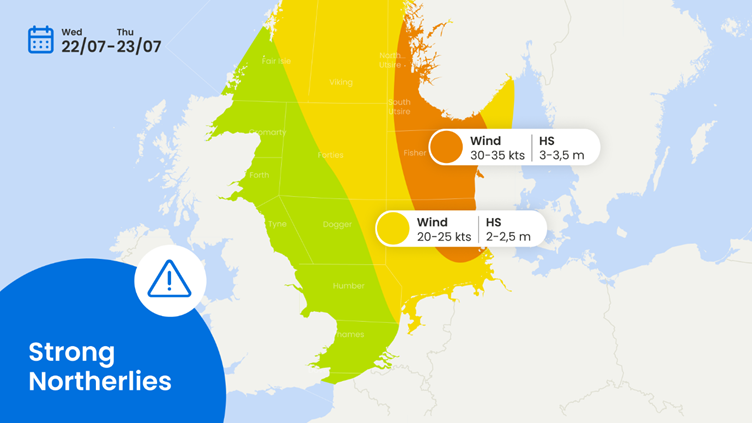
Figure 1: Severe Weather Chart for the North Sea on Wednesday and Thursday this week.
Skagerrak and Kattegat
The northerly flow also affects the Skagerrak and Kattegat on Wednesday and Thursday. Wind funneling may cause locally stronger conditions near exposed headlands and through narrower passages. These conditions can constrain towage, port approaches and coastal marine logistics. Workability improves from Friday as winds ease and the pressure gradient weakens.
Conclusion
Wednesday and Thursday bring the highest risk of operational disruption across the North Sea, Skagerrak and Kattegat. Conditions improve from Friday, while the weekend provides the best opportunity for weather-sensitive offshore work.
Existing customers can monitor the latest operational windows and regional developments in the Infoplaza dashboard. Planning a marine operation without access to our forecasts? Contact Infoplaza to explore how tailored weather intelligence can support safer and more efficient decision-making.